My first trip to Japan was a business trip in early 1988, with my boss, and his boss – our CEO. It was an exhausting ten-hour flight from California.
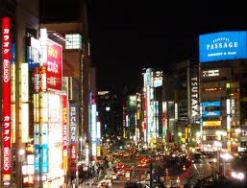
At that time, Tokyo was the biggest, densest city on earth. It was an eye-opener for me.

We made the trip to finalize a deal with Mr. Nakayama – the President of Sega. My company, Activision, agreed to become Sega’s first US-based “third party licensee,” giving us the right to publish games for Sega’s Master System, the precursor to the Genesis.

I was too stingy to buy a decent briefcase for the trip. I found a ratty old metal one in my dad’s garage. I think it dated from the 1940’s – it weighed a ton. My co-workers thought it looked hilarious.
Inside my briefcase were all the contracts and agreements between our two companies, ready to be signed. The lawyers had worked for months. We arrived in Tokyo on a Thursday afternoon – the big meeting was scheduled for Friday.
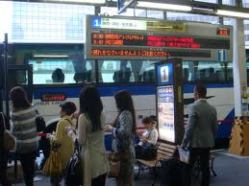
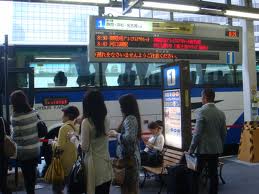
Friday morning I found to my horror that my briefcase was missing. After a few sickening moments I realized that in my jet-lagged stupor I must’ve left it in the bus station on our way into town.
I took an expensive, panicky taxi ride across Tokyo, visualizing an immediate and humiliating hiccup in my career.
I ran into the bus station, and there it was, in the exact spot where I had set it down, sixteen hours before. No one had touched it all night – the contracts were undisturbed.
I could hardly believe my luck, or imagine a culture so honest. I was overwhelmed with relief.
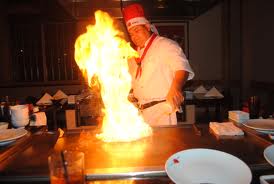
The agreements were signed without incident. That night Sega hosted a dinner at an expensive Benihana-style restaurant, to celebrate our firms’ important new relationship. It was pretty formal – everyone in suits and ties. Three Americans, and six Sega executives. The food was wonderful – I tried my first Kobe beef.
At the head of the table, Mr. Nakayama ordered a bottle of expensive French bordeaux. One of the famous ones – Chateau Petrus, I think. To my amazement, over the course of the meal, he proceeded to drink the entire bottle himself. It seemed very rude – a reminder that I understood nothing of Japanese culture. The rest of us drank Kirins and Sapporos.
Making conversation, I asked the exec on my right if he lived in Tokyo.
“No, my home is a two-hour train ride outside Tokyo.”
“That’s a long trip after a late dinner,” I commented.
“Oh, tonight we’ll stay with our girlfriends in our apartments here in town.”
“You all have girlfriends, and apartments in town?”
“Yes, once a Japanese salary-man reaches a certain level, this is expected. We usually go home only on weekends.”
“What does your wife think of this arrangement?”
“It’s none of her business. I work hard and pay the bills. Her job is to manage the house and raise the children.”
“You have children?”
“Yes, a boy and a girl, both in college now.”
“Is your wife jealous of your girlfriend?”
“I don’t know – it isn’t discussed. Besides, I haven’t touched my wife in fifteen years. None of us sleeps with our wives anymore.”
“That sounds very lonely for them. In America, I think many wives in this position might take a lover.”
“Oh, no. In Japanese culture that would never be accepted. The wives have each other. They gossip and shop, take lessons at the country club, look after the kids and the old folks. Their duties are very clear.”
“So, they have no options for love and affection? Just…do without?”
“In Japan, a young woman has basically two paths available. She can be traditional – get married and raise a family like mine, or she can be modern – go to work, and usually become the pampered mistress of an older businessman. The corporate girls have much more freedom and fun, and seem happier, but the wives have more respect and more security.”
“I see. And which of these two paths are you hoping your daughter will choose?”
He put down his chopsticks, turned, and looked at me. I was afraid I had gone too far.
“I understand what you are saying,” he said quietly. “The young generation is demanding changes. I think perhaps my daughter will expect something more. I hope so.”
The bill for dinner came – almost $5000. I was impressed.

The next day, my bosses went home, but I stayed for a couple of days to explore Tokyo. When he heard it was my first time in Japan, Mr. Nakayama generously lent me his personal car and driver for the weekend. It was an ostentatious white limo. The only one in Tokyo, probably – everywhere we went, people stared. I hunched down in the back seat.
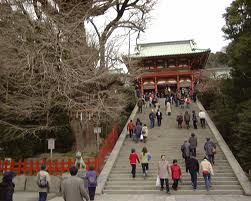
The driver took me out to see Kamakura – the ancient capital, full of gardens and temples. A change of pace from Tokyo.
As it turned out, a few years later I joined Sega myself, and came to know some of those men pretty well. They always treated me fairly. The last time I saw Mr. Nakayama, someone mentioned to him that I appreciated good wine.
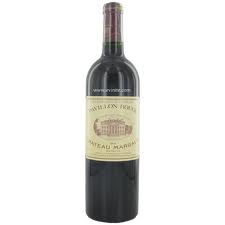
He smiled, reached into his office closet, pulled out a $300 bottle of 1985 Chateau Margaux, and presented it to me.
“From one wine lover to another,” he said.
I took the bottle back to my hotel room and opened it. I didn’t share.



 Wandering the World
I am truly enjoying all of your blog posts. Thank you! 🙂